3rd Grade


Different genres are read, including biographies, historical fiction, realistic fiction, nonfiction, poetry, and fantasy. Trade books are used throughout the year to teach and emphasize comprehension skills such as: main idea and details, cause and effect, compare and contrast, predicting outcomes, drawing conclusions, problem and solution, summarizing, critical reading, fact and opinion. Literary skills are also emphasized, such as: story elements, figurative language, dialogue, vocabulary, sound devices (rhyme, alliteration, etc.) Grammar units include sentence sense, types of sentences, subjects and predicates, capitalization, punctuation, parts of speech (nouns, verbs, pronouns, adjectives, and adverbs), and sentence and paragraph revision. Writing projects complement reading units, and the writing process is emphasized throughout the year. Journals and various projects, such as narratives, letters, poems, advertisements, descriptions, and comparison articles, are written. Emphasis is placed on spelling generalizations, prefixes, suffixes, endings, possessives, contractions, antonyms, synonyms, context clues, and syllabication. Phonics skills taught in previous grades—including consonants, short and long vowels, syllables, consonant blends and digraphs, word structure, and suffixes and prefixes—are also reinforced.
Third Grade students learn to identify place value to the millions and round these numbers. They also learn to add and subtract multi-digit whole and decimal numbers with regrouping. Multiplication of three-digit multiplicands with two-digit multipliers is also taught. Students practice division with two-digit divisors and three-digit dividends. A geometry unit is also introduced, where they learn to identify geometric shapes and design their own tessellations.
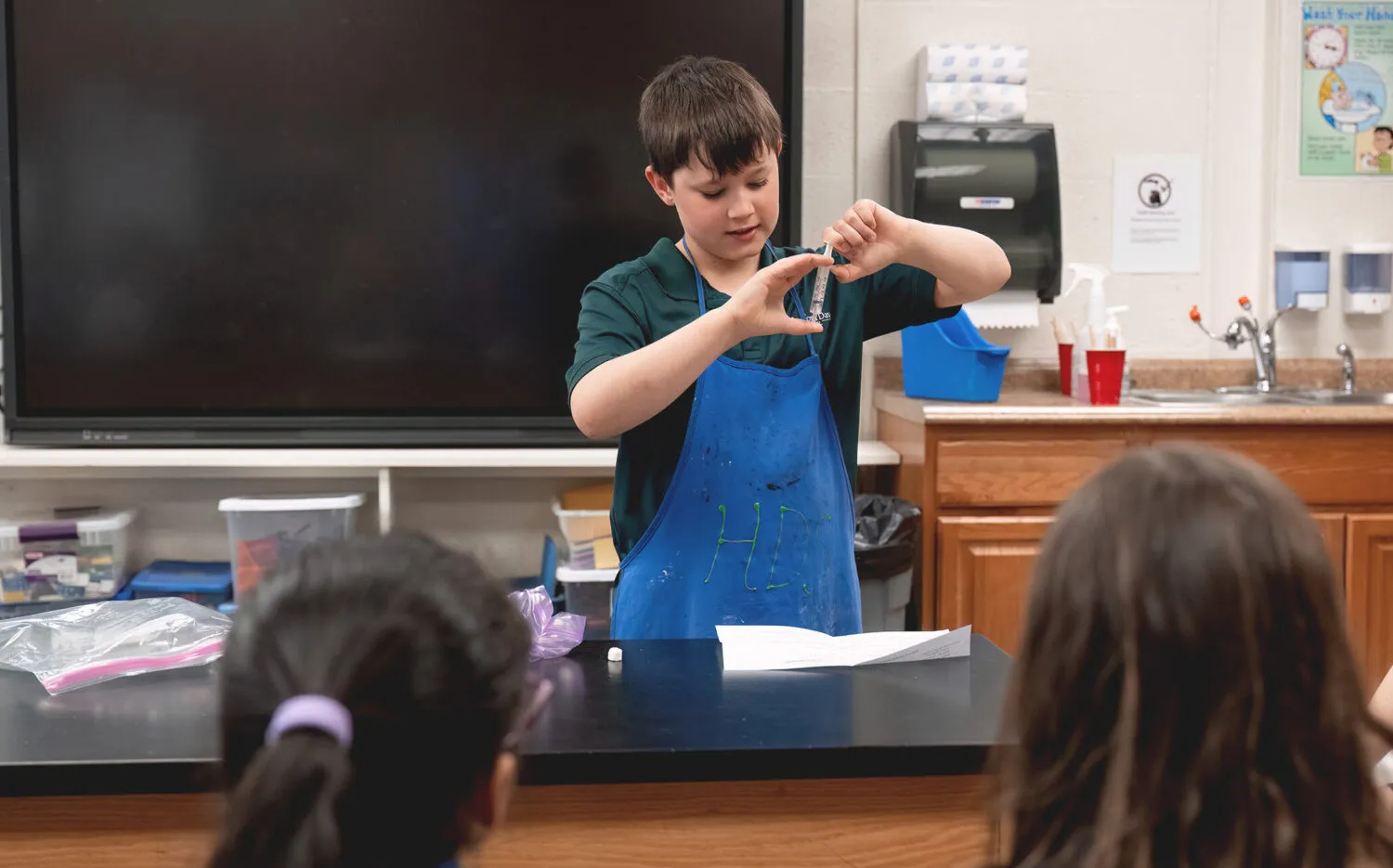
The major themes in science are studied each year in the lower school, including: classification, change over time, energy, engineering design, forces and interactions, measurement, problem solving/process/scientific methods, structure and function, systems, and collaborative discovery through hands-on explorations. In third grade, units incorporating these themes include rocks and minerals, ecosystems, force and motion, chemistry, simple machines, inventions, and the engineering process. In addition, each student takes a turn being a Science Wizard by selecting an experiment and presenting it to his/her peers. Students also participate in Genius Hour, a program that begins with a topic of inquiry followed by research and creation of a prototype.
The study of the regions of the United States encompasses the location of each region, the states in each region, famous people and places, and geographic “wonders.” Map skills include locating states on the U.S. map, distinguishing between a city, a state, a country, and a continent, applying directional words, using map legends and scales, and identifying different land and water forms. By the end of the year, the students identify all the states and capitals on the U.S. map. The study of Maryland includes an awareness of the beginning of our colony until the present, noting people from Maryland as they connect to the history of the U.S. and the geographic features of the state.
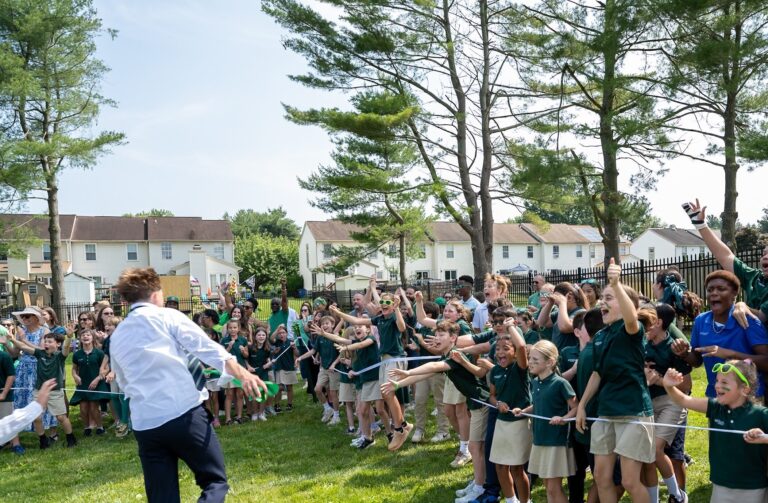

Drawing, sculpting, and painting skills are emphasized as the students further examine the elements of art: color, line, shape, space and design. Projects are related to classroom studies, art appreciation, and different cultures. To correlate with social studies units of the various regions of the United States, art projects complement each region.
Students learn to locate, read, and enjoy books in fiction collection; locate specific areas of interest in the non-fiction section; locate biographical materials. Various genres including folklore, fable, fairy tale, and tall tale are introduced. Students also learn to navigate the automated library catalog system and encyclopedias. Appreciation of books as a source of information and pleasure is emphasized, and students begin to evaluate quality in picture books. Third Graders also complete a Spanish-speaking country research project using print and non-print materials and read and evaluate picture books for the Black-Eyed Susan Book Award Program. Students are exposed to proper care and use of computers, equipment, and software. There is a strong emphasis on logical thinking, etiquette, and manners. They learn to navigate the Mac OSX operating system. Students learn how data is transported through a computer and how various peripherals work together to perform a task. Using primarily Wixie, Education.com, ABC ya, and various educational websites, students begin to master basic, transferable computer skills, such as word processing, desktop publishing, keyboarding, web navigation, and creating Quick Time movies. Internet safety activities for the safe use of communication technologies are taught in Third Grade through Common Sense Media.
Third Graders continue to read, write, and compose with new pitches and rhythms. These music reading skills are reinforced as they begin recorder. By playing the recorder, they learn tonguing, breath control, and improvisation. Singing rounds challenges them to listen to different parts while confidently singing their own part. Their performances include the Holiday Program, Third Grade Musical, and Grandparents’ and Special Friends’ Day.
The course emphasizes fundamental movement skills, attention to games, body and spatial awareness, creative rhythms, and dance. Jump ropes, hoops, parachute, beanbag, Frisbees, hoops and balls, and court games help develop skills. There is an introduction to team sports, emphasizing sportsmanship and teamwork.
Students work to achieve a more natural level of greeting and basic conversation. Focus is on child-directed dialogues, pronunciation, and an introduction to basic reading and writing in Spanish. Units of study include identifying objects, describing people, and mastering colors, shapes, numbers to 100, weather, science experiments, and family members. Students practice vocabulary by singing, dancing, and reciting poems. Students also use Spanish websites and flip charts to increase learning. Students complete projects on topics including animals, homes, and Spanish-speaking countries.
