1st Grade

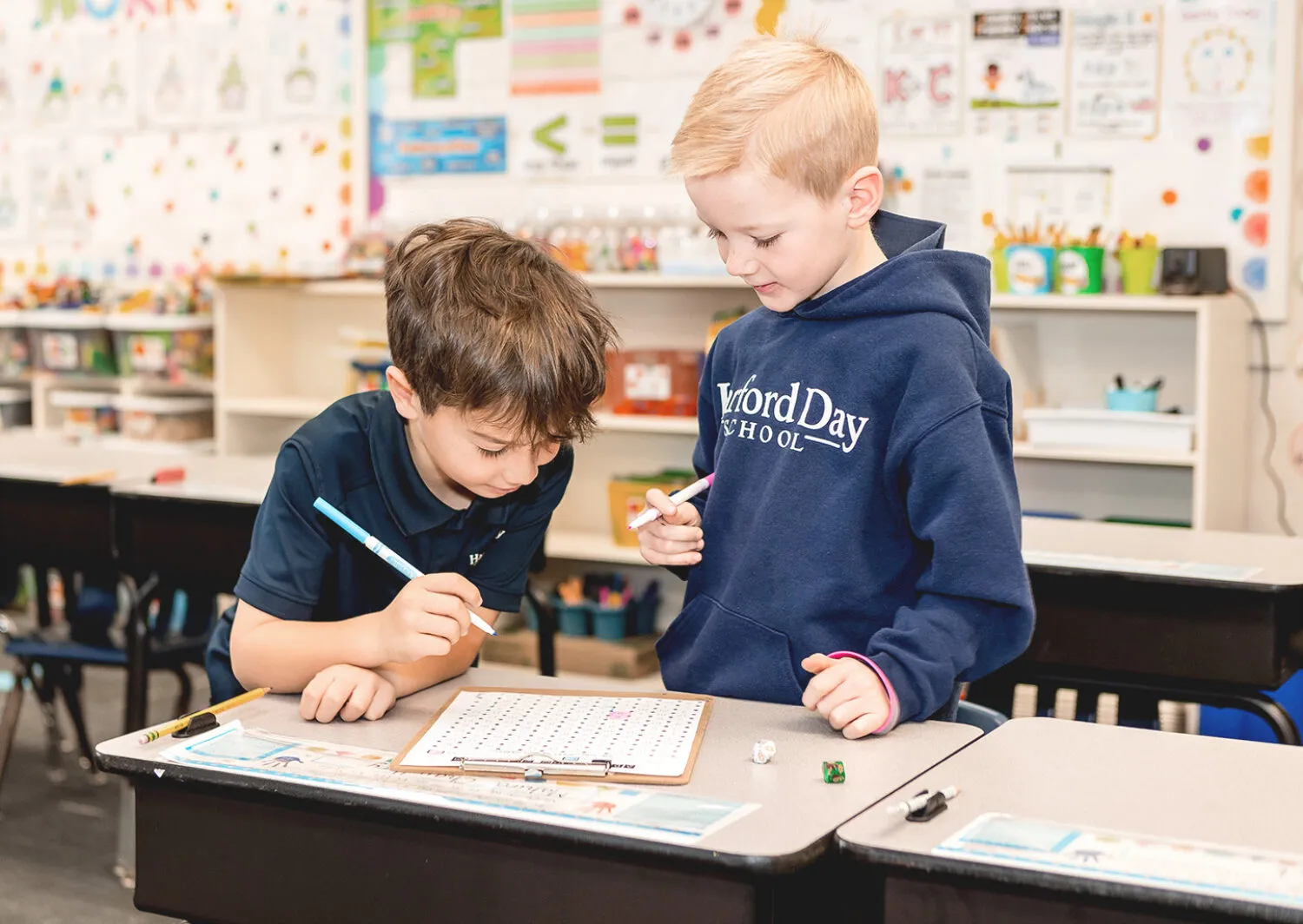

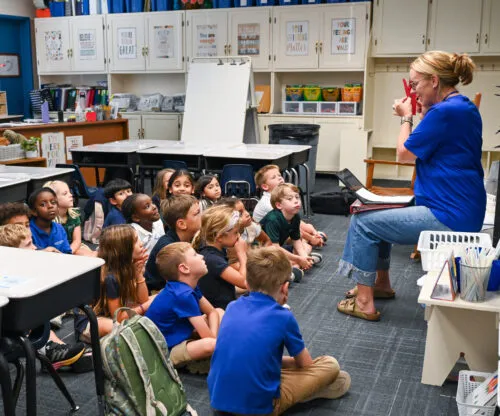
Classes utilize controlled vocabulary, home readers, big books, trade books, and supplementary classroom materials. Children’s literature includes a variety of different genres to increase vocabulary, recognize correct sentence structure, understand expressions, and enjoy good literature. Reading skills taught include: word attack, comprehension, expressive oral reading, higher-level thinking skills, and alphabetizing/study skills. Reading and listening are reinforced via books, audio, games, and hands-on materials. Phonics includes consonant review, vowels, the teaching of word endings, contractions, possessives, plurals, compound words, and recognition of multi-syllable words. Grammar usage is taught daily. Common and proper nouns, pronouns, verbs, adjectives, punctuation, including commas, quotation marks, and sentence structure are introduced. Writing is connected to language arts and social studies throughout the year, using the writing process. Instruction in formal composition includes titles, topic, and supporting sentences. Daily journal writing begins in September. Inventive spelling is acceptable with encouragement to apply phonetic skills for correct spelling.
Students learn addition and subtraction facts 1 through 18. They also learn place value to 999. Using these skills, the students learn to add and subtract two and three-digit numbers with and without regrouping. They also learn to compare numbers using the mathematical symbols (=, <, >) and explore fractions of a whole set. Multiplication, reading and interpreting graphs, identifying patterns, learning to identify coins, counting money, and basic geometry, focusing on two and three-dimensional shapes are also part of the program. Problem solving is an integral part of the daily math program.
The major themes in science are studied each year in the lower school, including: classification, change over time, energy, engineering design, forces and interactions, measurement, problem solving/process/scientific methods, structure and function, systems, and collaborative discovery through hands-on explorations. In first grade, units incorporating these themes include: What it means to be a scientist, the senses, trees, seasons, weather, light and sound, seeds and germination, insects, and magnets.
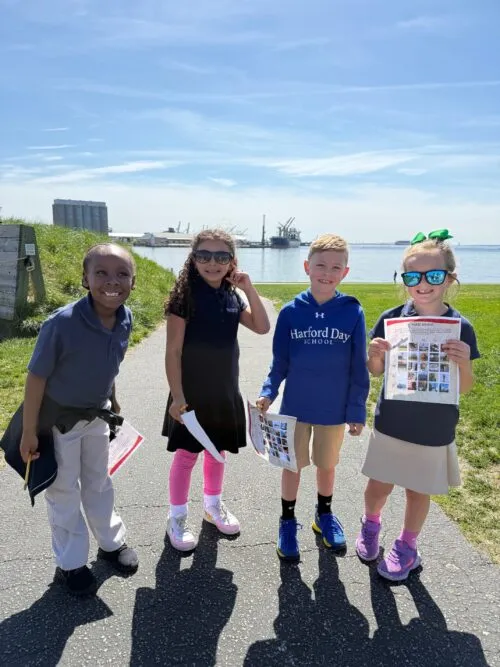
Map skills begin the year with an emphasis on continents and oceans. Students engage in the exploration of various countries and cultures around the world, including Japan, Mexico, and England. Units focusing on African animals and the monuments of Washington, D.C., are also studied. Field trips are planned throughout the year to complement various units of study.
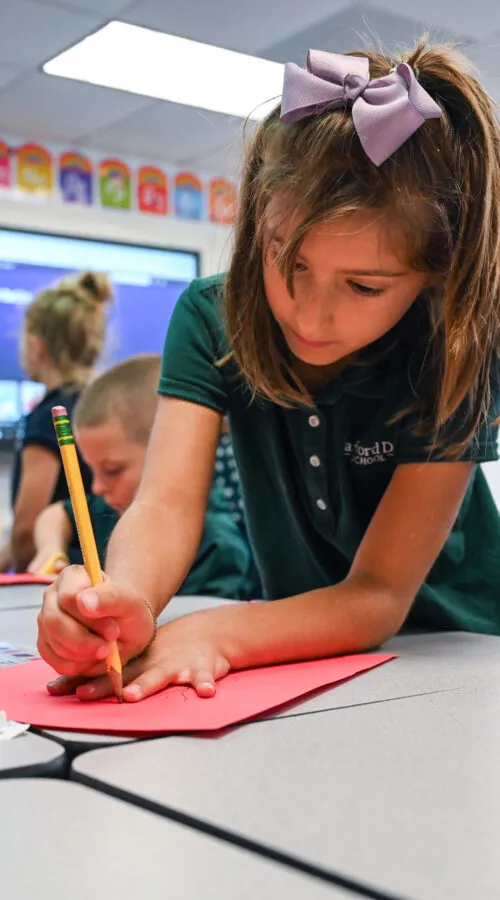
Fine motor skills are strengthened through the use of scissors, pencils, markers, and paint. Students are introduced to the elements of art: line, shape, space, color, pattern, and texture. Exploration of a variety of media is used in projects that are directly related to Social Studies, Science, and Language Arts classes.
Library rules and responsibilities are learned and observed, as well as how to handle and care for books properly. Skills such as differences in fiction and non-fiction, locating materials in the library, understanding the Dewey Decimal System, and identifying parts of a book are introduced. Students are also taught the appreciation of books as sources of information and for recreation, sharing, and enjoying stories and literary extensions. We introduce the research process and need for finding information for a specific purpose. Students are exposed to proper care and use of computers, equipment, and software. Using primarily Wixie, Education.com, ABC ya, Kids Blog, and various educational web resources, students acquire basic, transferable technology skills such as saving a document, printing to a networked printer, retrieving a saved document, word processing, desktop publishing, blogging, and web navigation.
Lower School students experience the elements of music through singing, movement, playing instruments, and creating. They learn to read and write rhythms and pitches by playing games and improvising. Students in Lower School work on ensemble skills while playing recorders, xylophones, and other percussion instruments. They learn about world music and sing, play, and dance to music from West Africa and Latin America.
Fundamental movement skills, fitness, body awareness, and creative rhythms are learned. Jump rope activities, hoops, parachute, beanbags, and frisbees may be introduced. Teamwork is nurtured and stressed throughout all activities, especially as the fundamental skills of some of the major sports (soccer, basketball, lacrosse) are introduced.
Using games, music, and a wide variety of visuals and objects, including Spanish websites and flip charts, children learn Spanish names and greetings, basic phrases, colors, numbers, animals, foods, clothing, classroom objects, days of the week, the calendar, the family, the weather and seasons, sports, and parts of the body. Students learn many songs in Spanish and gain an understanding of the Spanish culture and basic language. They also engage in projects and the study of Puerto Rico and Mexico.
